
How to distinguish between foam goods and heavy goods in international logistics?
Today, the editor will take a plate of heavy goods and soaked goods for everyone,
Are these goods soaked in water?
Is heavy cargo a relatively heavy commodity, and how should we judge it?
Before discussing foam goods and heavy goods, let's first understand them
What are actual weight, volumetric weight, and chargeable weight.
01 Actual Weight

Actual weight refers to the actual weight of the goods obtained by weighing, including actual gross weight (G.W.) and actual net weight (N.W.). The actual gross weight means that after comparing the calculated volumetric weight, the freight will be calculated and charged based on the maximum one.
02 体积重量(Volumetric Weight)
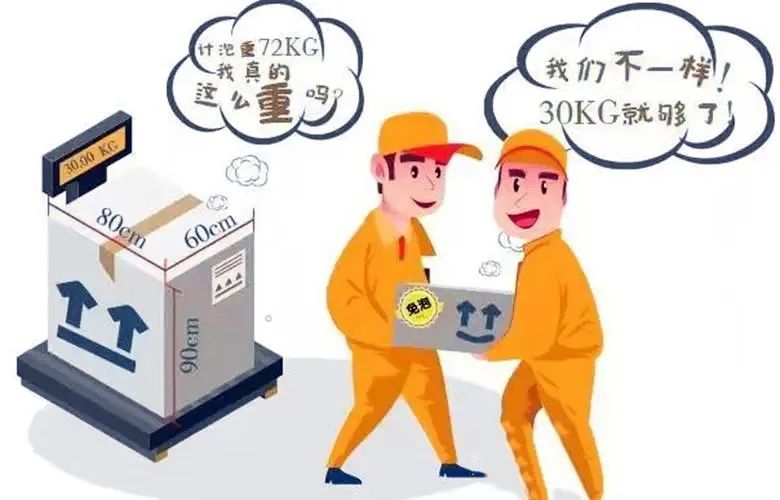
Volume weight is the weight obtained by calculating the volume of goods based on a formula. In international air transportation, the conversion factor for calculating volumetric weight is generally 1:167, which means that one cubic meter is approximately equal to 167 kilograms.
03 Chargeable Weight
The chargeable weight is calculated based on the weight of shipping and other miscellaneous fees. The chargeable weight is generally calculated based on the actual gross weight or volumetric weight. The chargeable weight is generally calculated based on the maximum of the actual gross weight and volumetric weight to determine the transportation cost.

Knock on the blackboard, the key is here
After discussing the weight, let's talk about the foam and heavy goods that everyone is concerned about.
04 heavy cargo

Simply put, goods with a weight greater than their volumetric weight are considered heavy goods. Such as iron products, steel products, etc.
05 泡货

Puffered goods, also known as abandoned goods, are generally referred to as light goods, which refer to goods whose volume converted weight is greater than their actual weight. Such as wooden chairs, plastic products, etc.
06 Calculation method
01 Calculation methods for express delivery and air freight
The calculation method for regular items sent by mail is: length (CM) * width (CM) * height (CM)/6000=volumetric weight (KG), where 1CBM is approximately equal to 166.67KG.
The calculation method for irregularly shipped items is: longest (CM) * widest (CM) * highest (CM)/6000=volumetric weight (KG), where 1 CBM is approximately equal to 166.67 KG.
【 Summary 】 Goods with a weight greater than 166.67 kilograms per cubic meter are called heavy goods, which are commonly referred to as relatively heavy goods. Goods weighing less than 166.67 kilograms are called "soaked goods", which in layman's terms refer to goods with a relatively large volume and light weight.
02 Calculation method for sea freight
The concepts of heavy and soaked goods in sea freight are closely related to stowage, transportation, storage, and billing.
Sea freight goods are measured in terms of volume (cubic meters). If the volumetric weight is greater than the actual weight (tons), it is calculated based on volume and called foam cargo. Otherwise, it is considered heavy cargo and calculated based on weight.
According to ship stowage, any cargo with a stowage factor less than the ship's capacity factor is called heavy cargo, while cargo with a stowage factor greater than the ship's capacity factor is called bubble cargo.
【 Summary 】 a: The stowage factor refers to the space (cubic meters or cubic feet) occupied by each ton of various goods when normally stacked in the cargo hold. b: The cargo hold capacity coefficient refers to the ratio of the total cargo hold capacity to the net load capacity of a ship, that is, the cargo hold capacity occupied by each net load ton.
Tips
This article is for reference only regarding the classification of heavy goods and soaked goods. In reality, the regulations of different companies may vary, and specific consultation with freight forwarding companies, transportation companies, express delivery companies, or logistics companies is required.
Address:22nd Floor, Block A, Liandu Building Futian Street, Yiwu City, Zhejiang Province
Telephone:0579-85391393
Cell phone:13216796913
;)